
Attesting and apostilling documents for India
Two different things get called the same word here, and getting them the wrong way round costs a fortnight. Attestation by the consulate is one procedure. Apostille by a US authority is another.
Which one your document needs
| Document | What it needs |
|---|---|
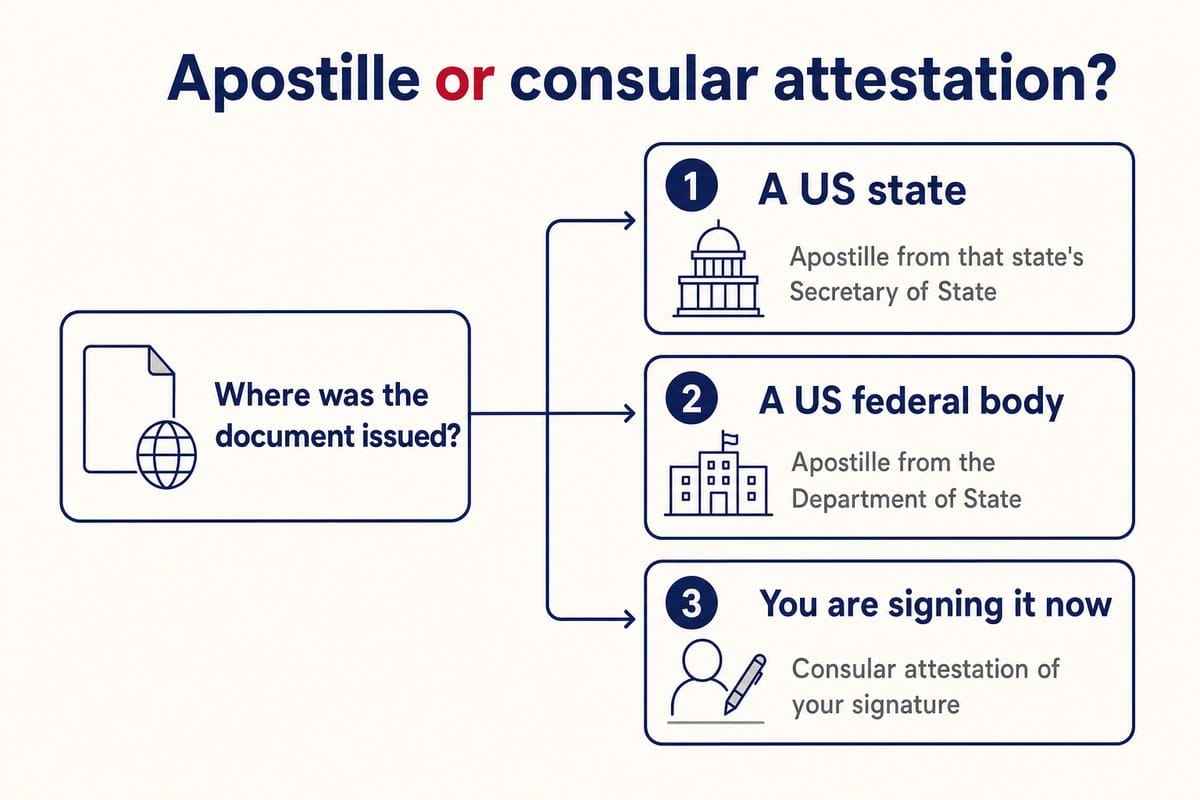
| US birth or marriage certificate for use in India | Apostille from the issuing state |
| US degree for use in India | Apostille, usually after notarisation |
| An affidavit you are signing now | Consular attestation of your signature |
| Indian document for use in the United States | Apostille in India, from the MEA |
What the consulate does attest
Signatures on documents executed in front of it, copies of Indian documents it can verify, and the specific attestations it lists for transport of remains and a handful of other cases. That last one is free.
Order matters
Notarise first, then apostille, then translate if a translation is needed. Doing the apostille before the notarisation means starting again.
- US documents: apostille from the issuing state, not the consulate
- Notarise before apostilling, never after
- Attestation for transport of remains is free
- Check what the Indian authority receiving it actually asks for
- Bring the original; a copy of a copy is refused
Which authority signs an American apostille
The Secretary of State of the state that issued the document, and only that state. A New Jersey birth certificate is apostilled in New Jersey whatever state you now live in, and a federal document goes to the US Department of State instead.
Consulates cannot shortcut this and do not try to. What they can do is tell you that the document in your hand is not ready.
Translations
Where a translation is needed it goes after the apostille, not before, and it is normally the receiving authority in India that sets the standard for who may translate. Translating first and apostilling the translation is a common and expensive mistake.